
A Complete Beginner's Guide to Running Hermes Agent in 10 Minutes — Build Your Own AI Assistant from Scratch, an AI Agent That Gets Smarter the More You Use It.
Video tutorial: https://www.bilibili.com/video/BV1yQR8BhEhm/
Preface
Have you ever had this experience: every time you open an AI chat window, you have to re-explain your identity, preferences, and work context all over again; each time the Agent executes a task, it's like it's "starting a new job," with all previous experience reset to zero — and you end up having to manually fix the same bugs over and over.
What if there were an AI assistant that could be deployed in just a few minutes, remember every conversation you've had, distill execution experience into reusable Skills, and stay online 24/7 in WeChat, Feishu (Lark), or Telegram, ready to respond at any time — one that doesn't just complete "a single task" but continuously learns how you work?
That is Hermes Agent.
As an open-source, self-hosted AI Agent system, Hermes not only supports mainstream models like Kimi, GLM, Claude, and Gemini, but is also built around the core design of long-term memory + skill evolution: it learns from mistakes, consolidates skills, and compresses context, making the same tasks run faster and consume fewer tokens over time. Compared to similar products, its tool calls are more transparent and migration costs are lower (a single command is enough to migrate from OpenClaw), making it a truly personal Agent system designed for long-term tasks.
In this guide, I will walk you through environment setup, model configuration, TUI conversation, and message gateway integration — guiding you step by step through your first Hermes Agent deployment.

Admin's community group: 767557452
Hermes Agent Overview
Hermes Agent is a lightweight AI Agent that is open-source, self-hostable, and equipped with long-term memory and skill accumulation capabilities, optimized for the environment and needs of Chinese users. Its core strengths are as follows:
- 🪶 Extremely Flexible Deployment: Supports local PCs, VPS, Docker, WSL2, and other environments, covering Linux/macOS/Windows across all systems, with accelerated installation via domestic mirrors;
- 🧠 Evolves Over Time: Remembers your projects, preferences, and work habits across sessions, distilling solved problems into reusable Skills — the more you use it, the better it understands you;
- 🛠️ Comprehensive Toolset: Supports 40+ tools including MCP, terminal, files, browser, images, TTS, etc., with cron support for automation like daily reports, backups, and inspections;
- 🔌 Always Online: Can be integrated with messaging gateways such as QQ, WeChat, Feishu (Lark), DingTalk, Telegram, and Discord, ready to respond anytime, anywhere;
- 🧩 Full Model Compatibility: Supports Qwen, GLM, Kimi, MiniMax, Claude, Gemini, OpenAI-compatible interfaces, and local models, adapted for domestic network conditions.
Hermes Agent official website: https://url.zeruns.com/HermesAgent
Preparation
Here I am using a Linux cloud server as a demonstration. You can also use your own Raspberry Pi, Mac, mini PC, or other devices for deployment, but choosing a cloud server might be more convenient. For example, if you want to build a website, you can instruct it to write the site and deploy it directly so it can be accessed right away.
Recommended cloud servers:
- Rain Cloud Hong Kong Zone 5 high-bandwidth VPS review, 2 cores 2GB 500Mbps only 19.6 RMB/month: https://blog.zeruns.com/archives/932.html
- Cool Duck Data Hong Kong VPS performance review, direct connection to all three networks, 2 cores 2GB 5Mbps only 6.9 RMB/month: https://blog.vpszj.cn/archives/2646.html
- BeiShao Cloud Hong Kong Zone A VPS, 2 cores 2GB 10Mbps only 18 RMB/month, direct connection to all three networks: https://blog.zeruns.com/archives/933.html
- Other cost-effective server recommendations: https://blog.vpszj.cn/archives/41.html
Here I am using the Rain Cloud cloud server as a tutorial demonstration. First, register a Rain Cloud account via the promotional link or promo code (zeruns) below. After registering, log in to the console and click Cloud Server -> Purchase Cloud Server.
- Rain Cloud promotional registration link: https://rain.zeruns.com/?s=blog
- Rain Cloud promo code: zeruns
- Using the promo code for registration gives you a 50% off first-month coupon, and you can also claim an exclusive 20% off new purchase coupon in the points mall. The 20% off coupon can be stacked with the official annual 30% discount, giving you 44% off.
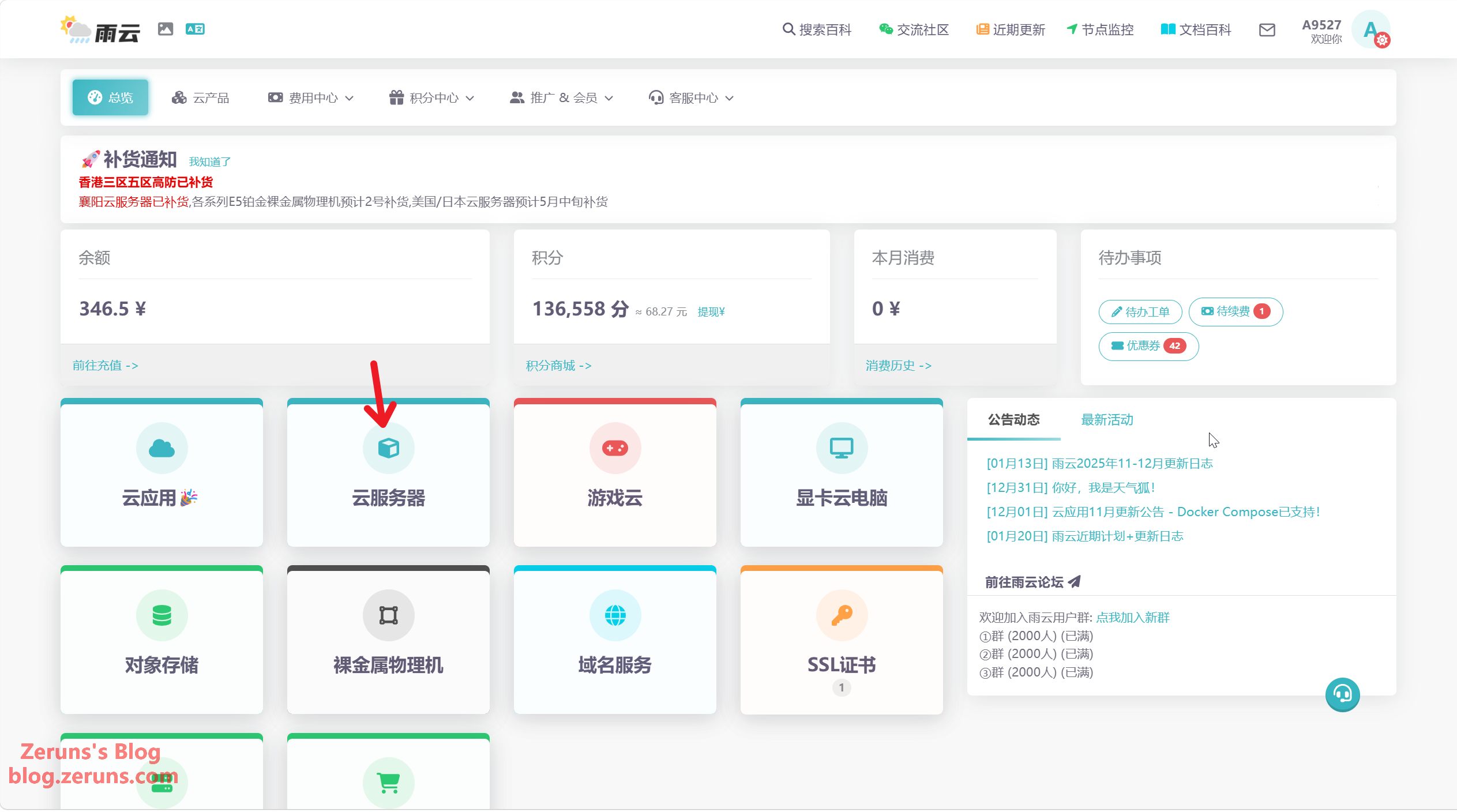
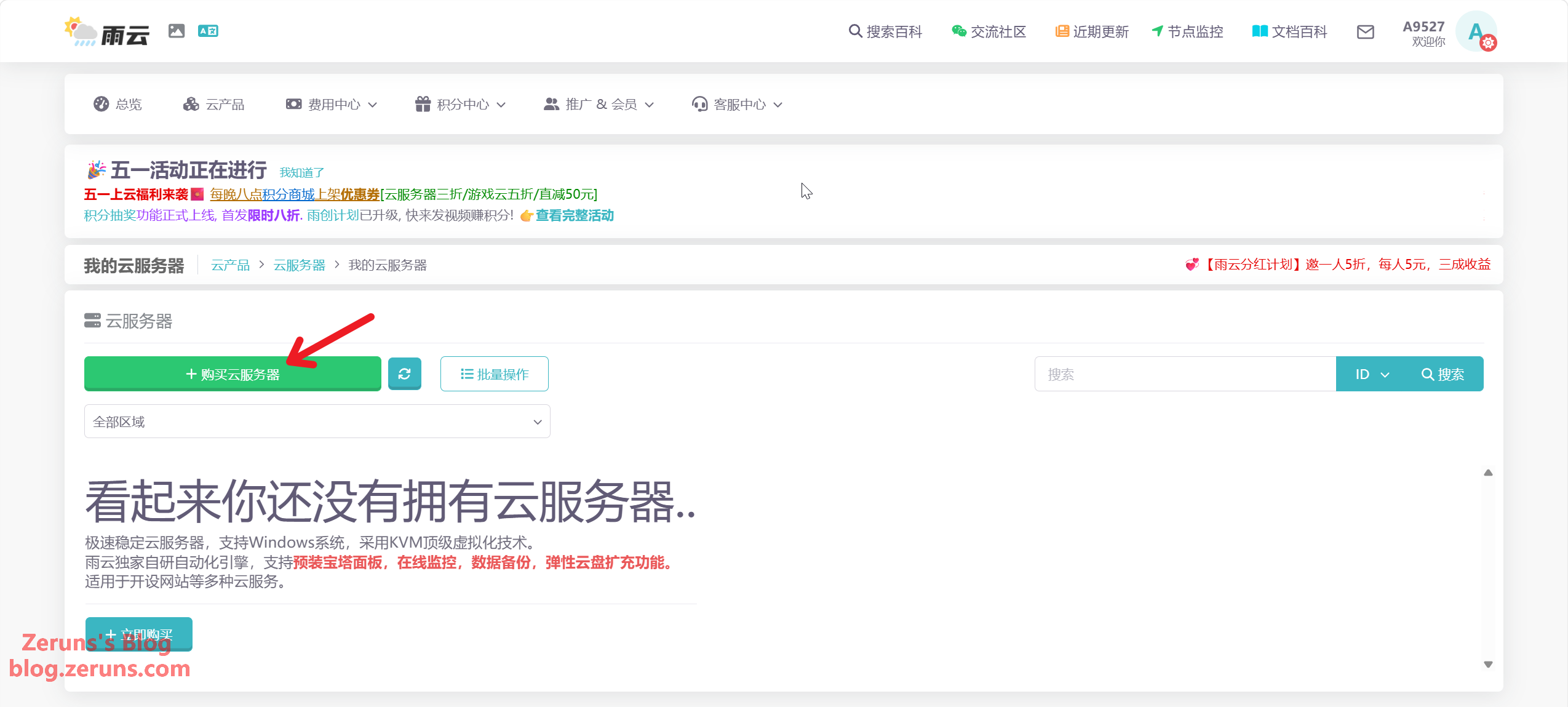
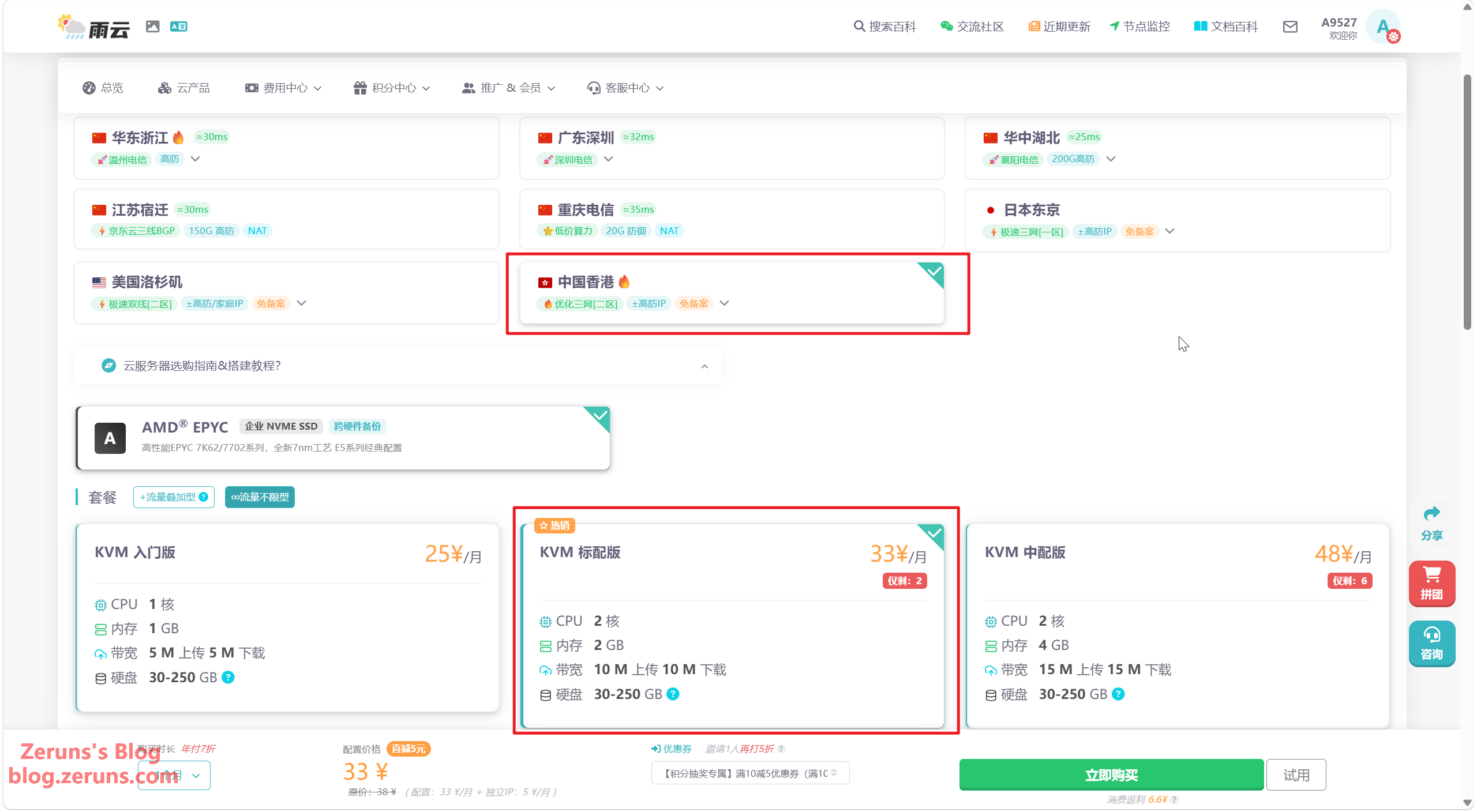
Then select the server region and configuration according to your needs. I am choosing Hong Kong Zone 2, 2 cores 2GB. If you need to host a website, it is recommended to choose Hong Kong/Japan/USA, as no ICP filing is required.
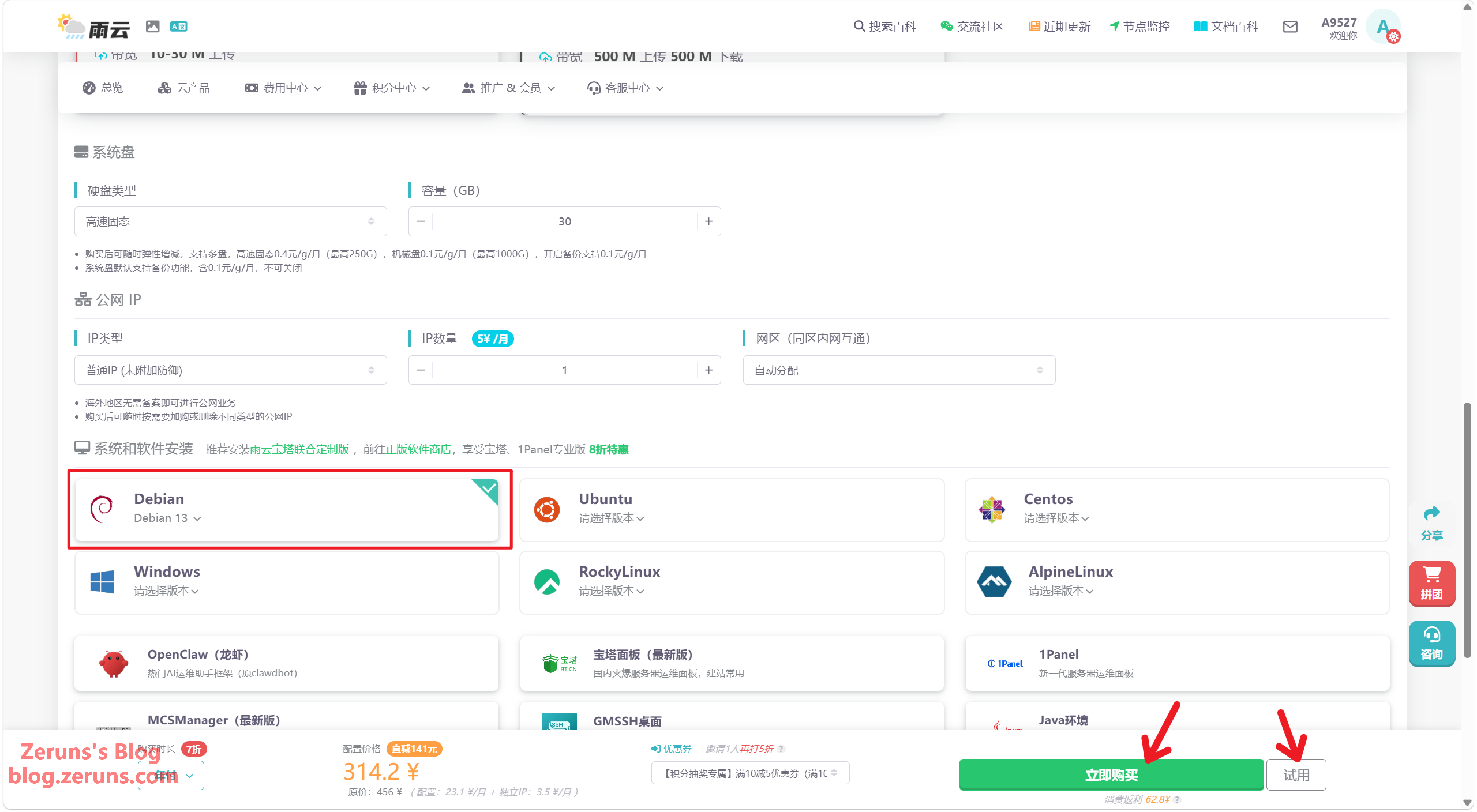
Select Debian 13 as the system, then click Purchase Now or Try (you can try it for 1 day for just 1 RMB).
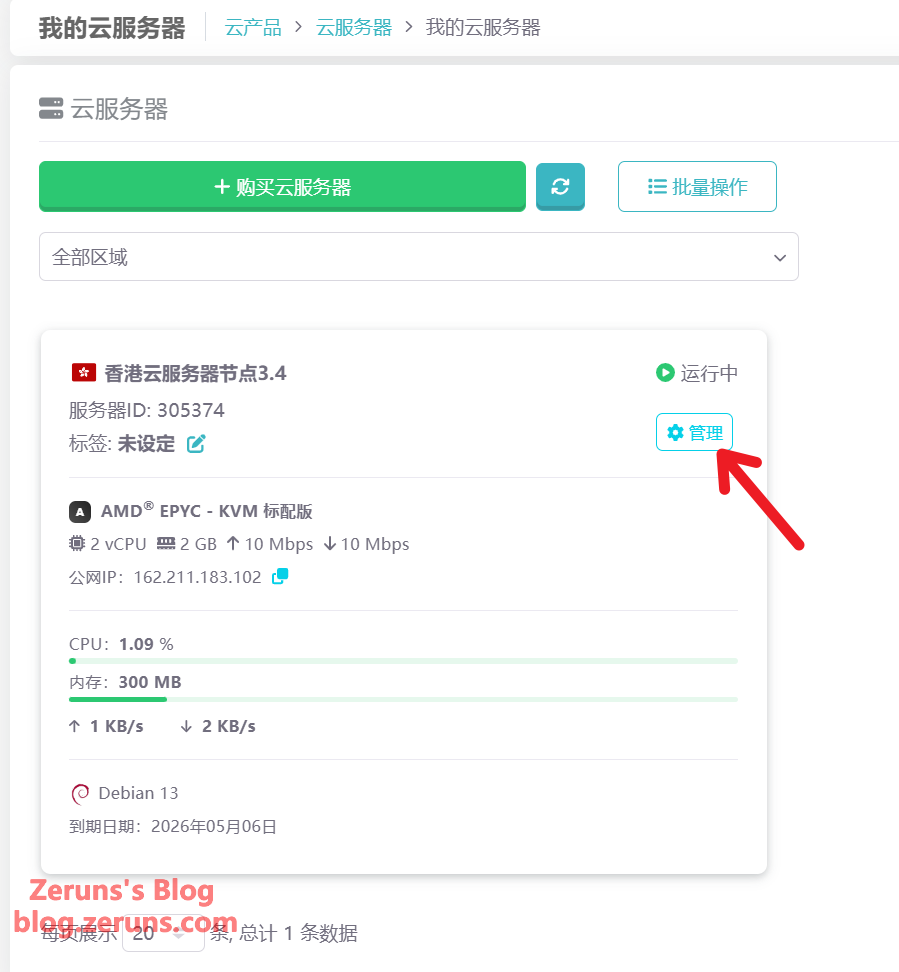
After purchasing, you can see your cloud server under "My Cloud Servers." Click Manage.
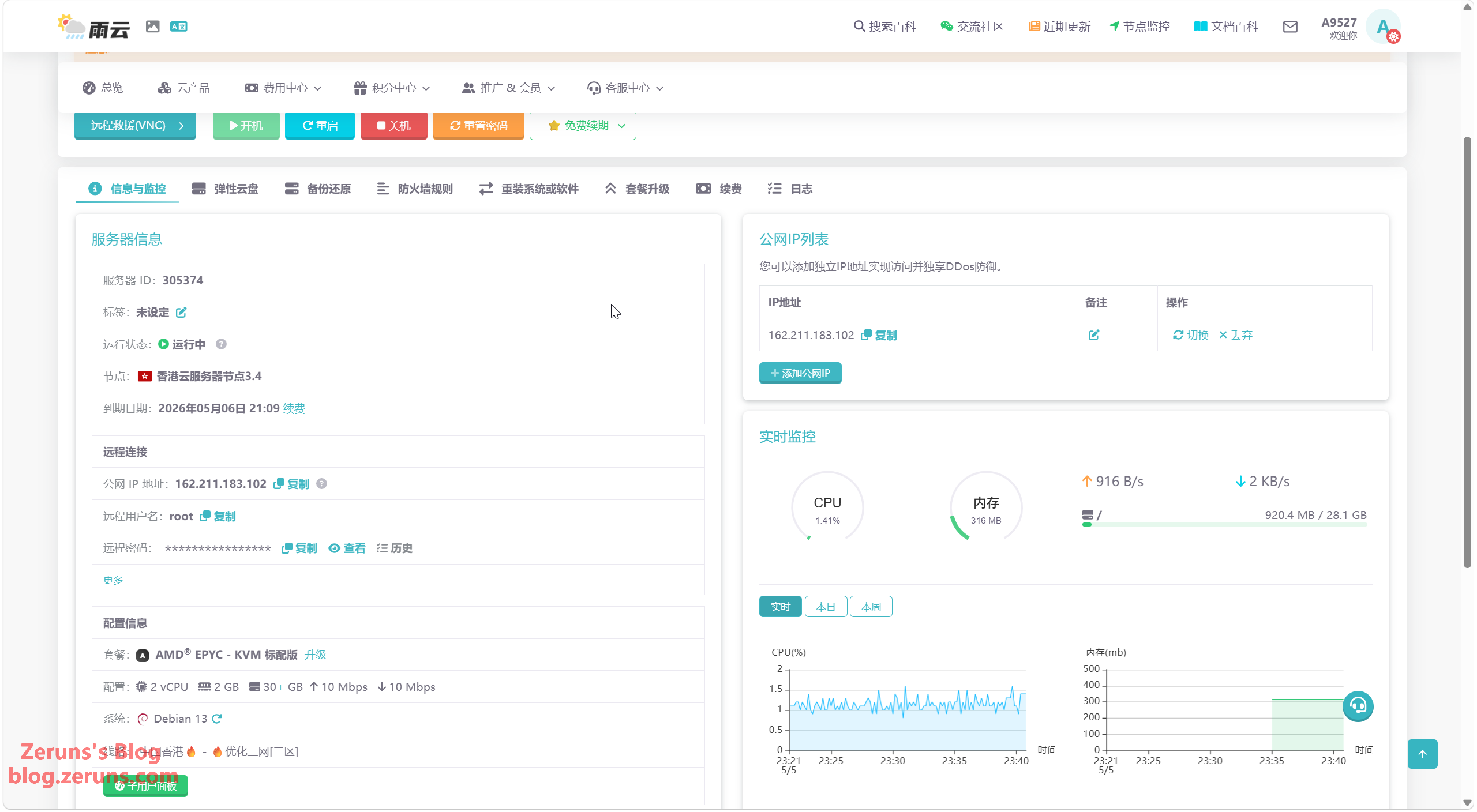
Then you can see the cloud server information. Here you can reinstall/switch the system and upgrade the configuration. Wait for the server creation to complete before proceeding to the next step.
Next, you need to wait for the server to be created. During this time, let's prepare the API for the LLM platform first. Here are a few recommended platforms:
- Ucloud AstraFlow: https://url.vpszj.cn/uc_astraflow
- Alibaba Cloud (this link gives a 10% off coupon): https://url.vpszj.cn/alicloud
- SiliconFlow (registration via this link gives a 16 RMB voucher): https://url.vpszj.cn/siliconflow
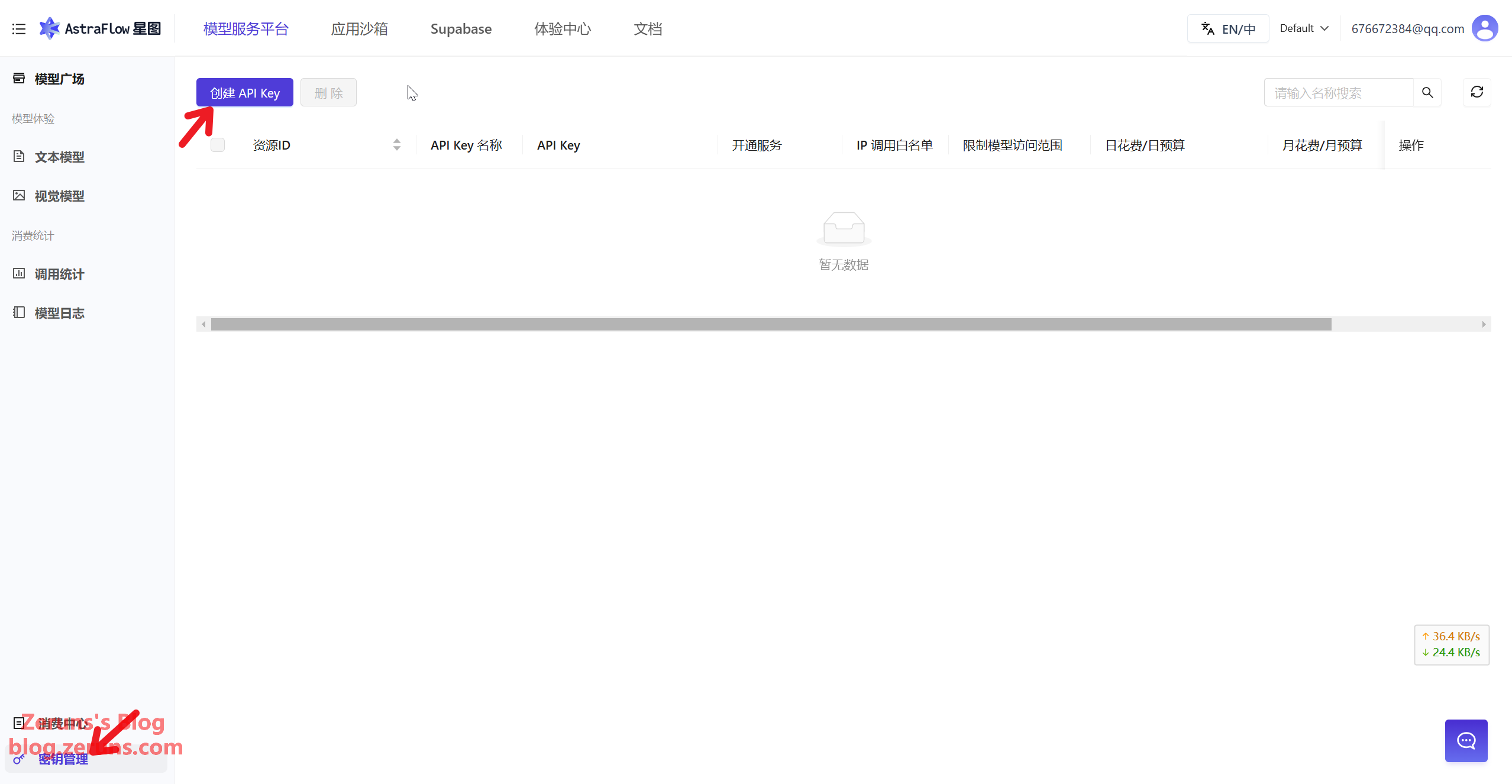
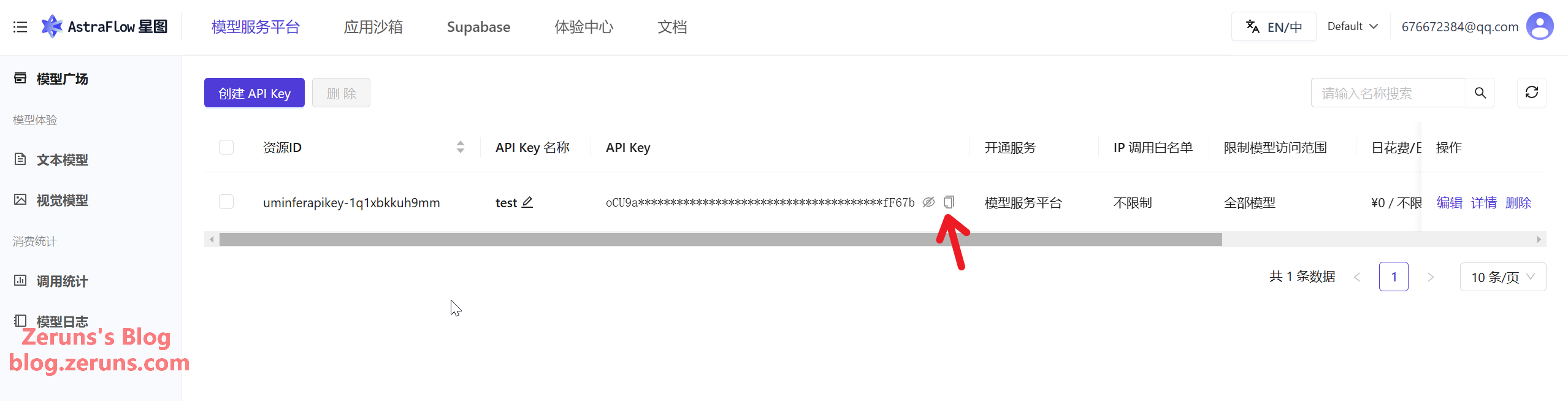
I am using Ucloud's AstraFlow StarMap platform as a demonstration. Register via the link below and log in to the Ucloud StarMap platform, click Key Management in the bottom left corner, then click Create API Key.
- Ucloud promotional registration link: https://url.vpszj.cn/uc
- Registration via the promotional link gives 500K free tokens
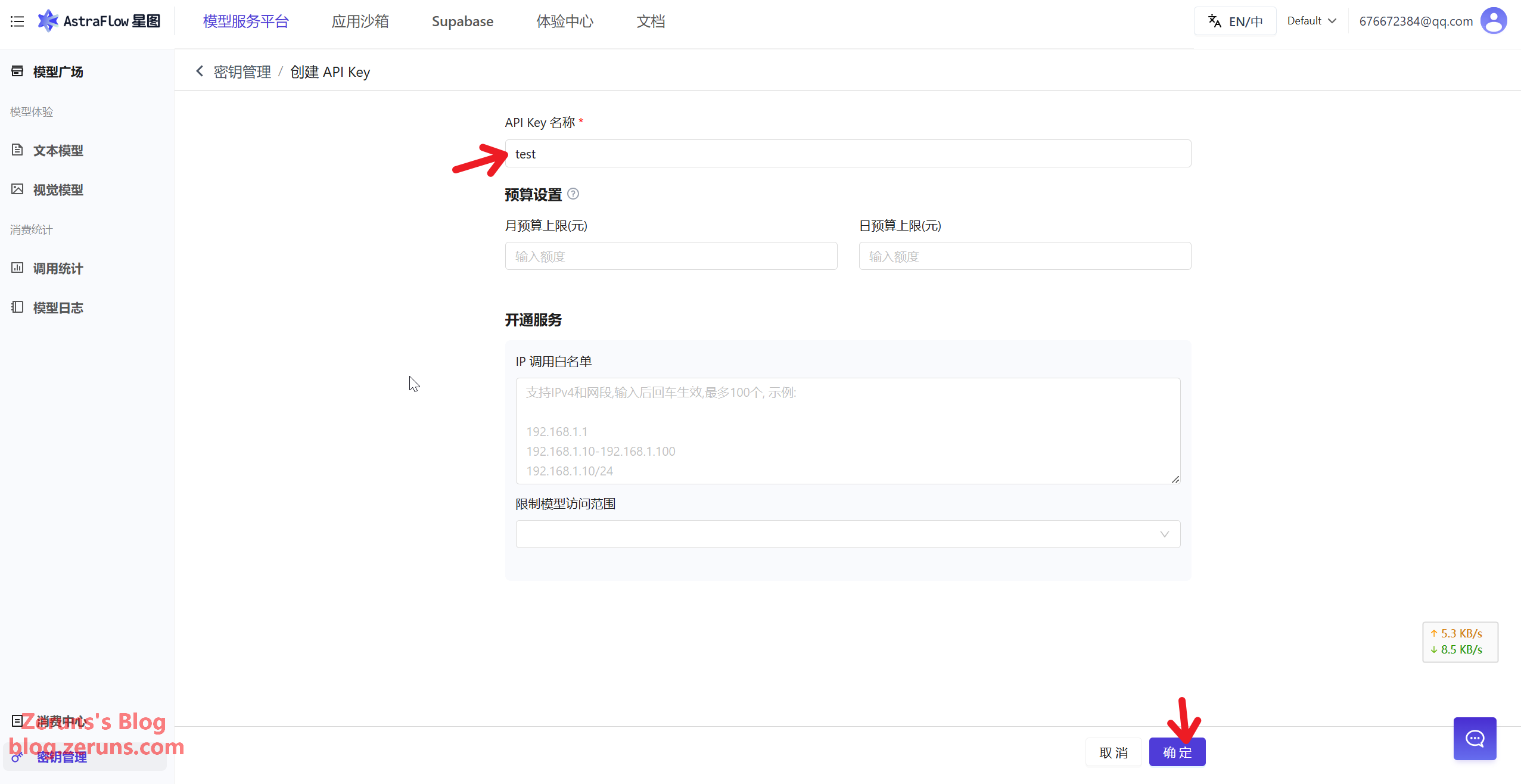
Set a name for the API Key, you can also set a budget limit. Leave everything else as default, then click Confirm.
Then you can copy and save this API Key. You will need it later when installing Hermes. Other platforms follow a similar process.
Connecting to the Server
Download, install, and open an SSH client software. Recommended SSH clients are PuTTY or MobaXterm.
SSH client software download link: https://www.123pan.com/ps/2Y9Djv-UAtvH.html
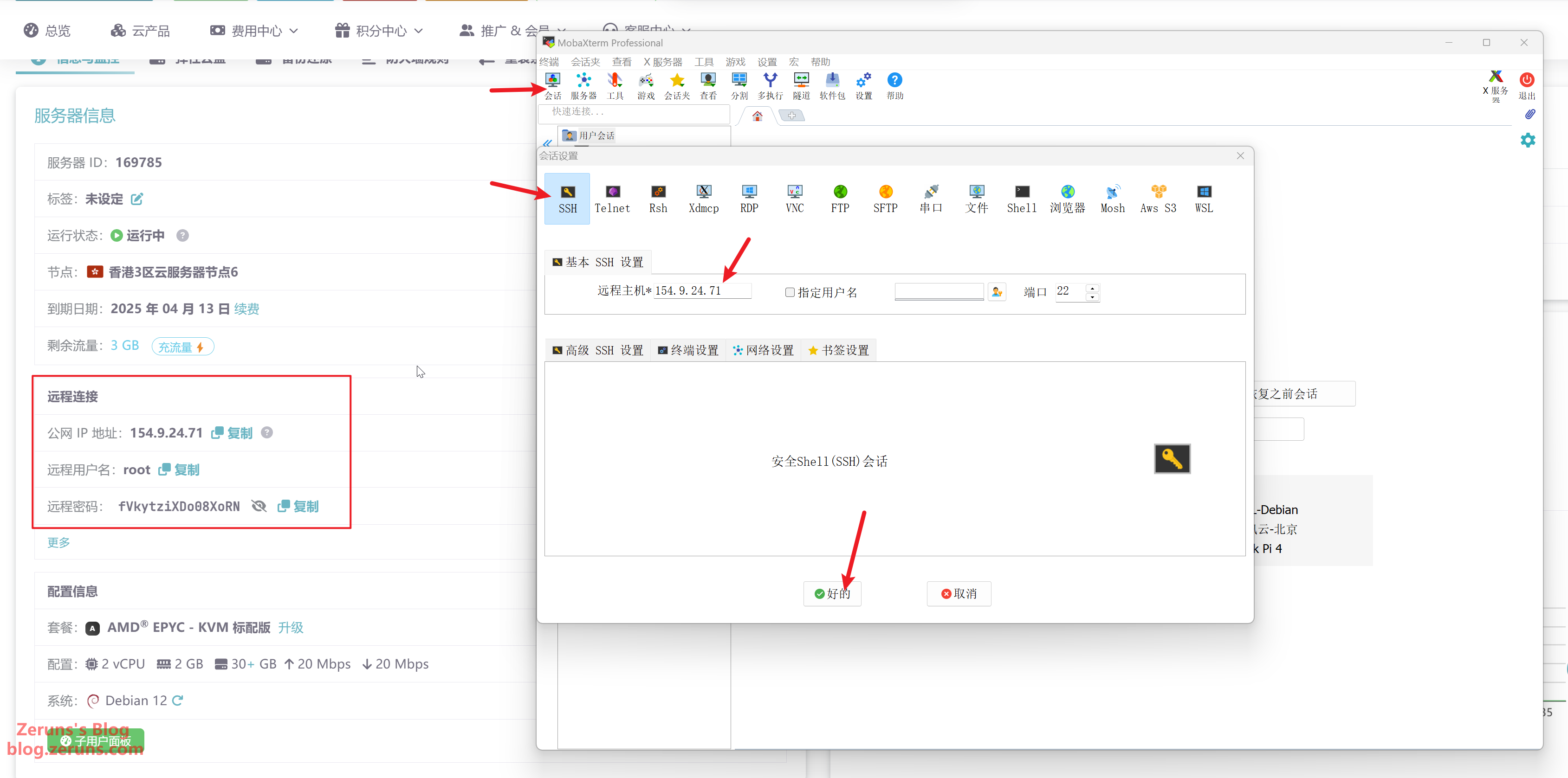
I am using MobaXterm here. In the SSH client, enter your server's IP address (obtained from the console), as well as the SSH port (default is 22), then click OK or Open.
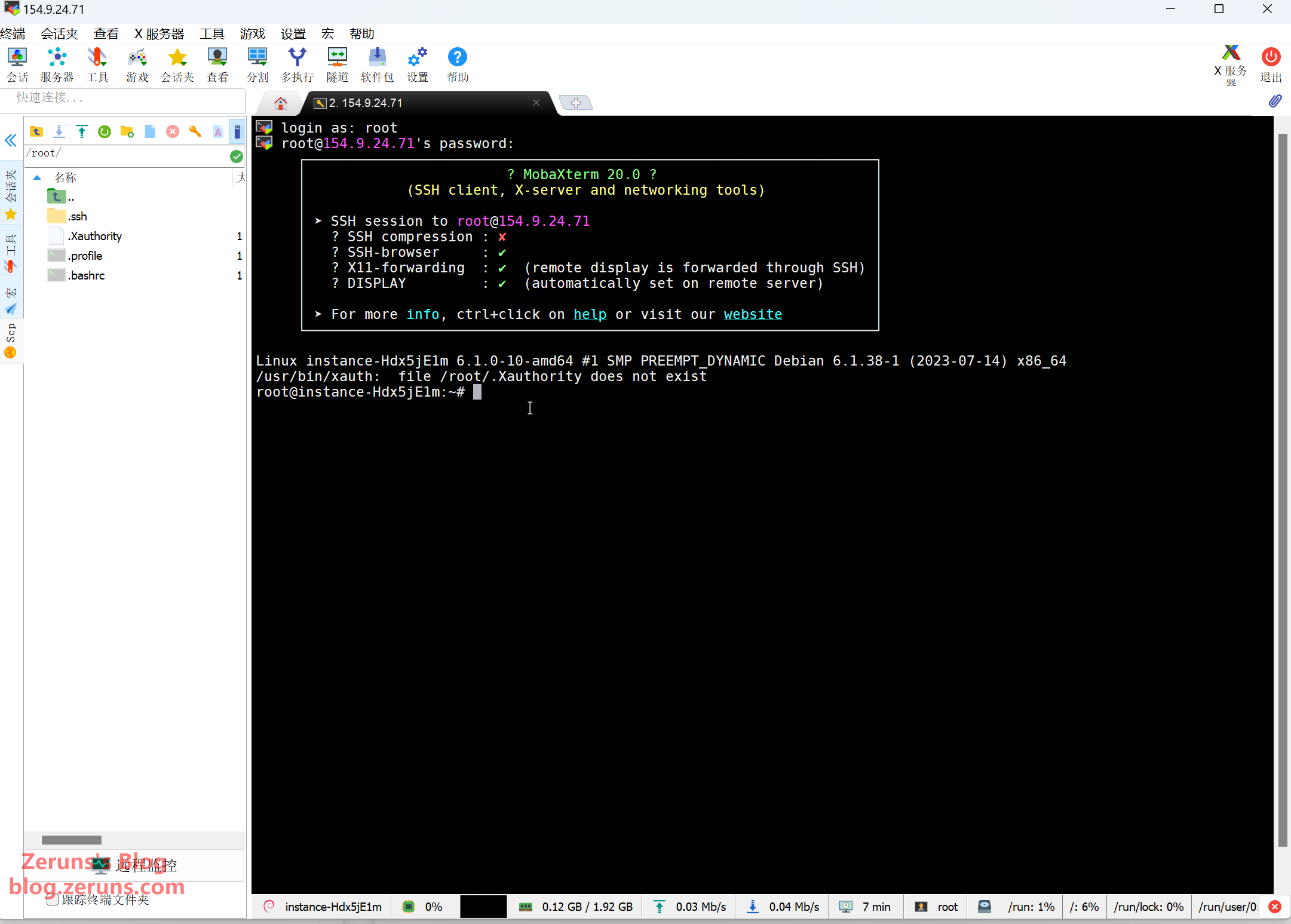
Then enter the username and press Enter. The username is generally root by default. Next, enter the password (obtained from the console) and press Enter to confirm. The password will not be displayed as you type it.
Tip: In the SSH terminal, hold down the left mouse button to select text, then release the mouse button, and click once in the blank area to copy the selected text. Right-click in the SSH terminal to paste.
Changing APT Mirror (Skip this step for overseas servers)
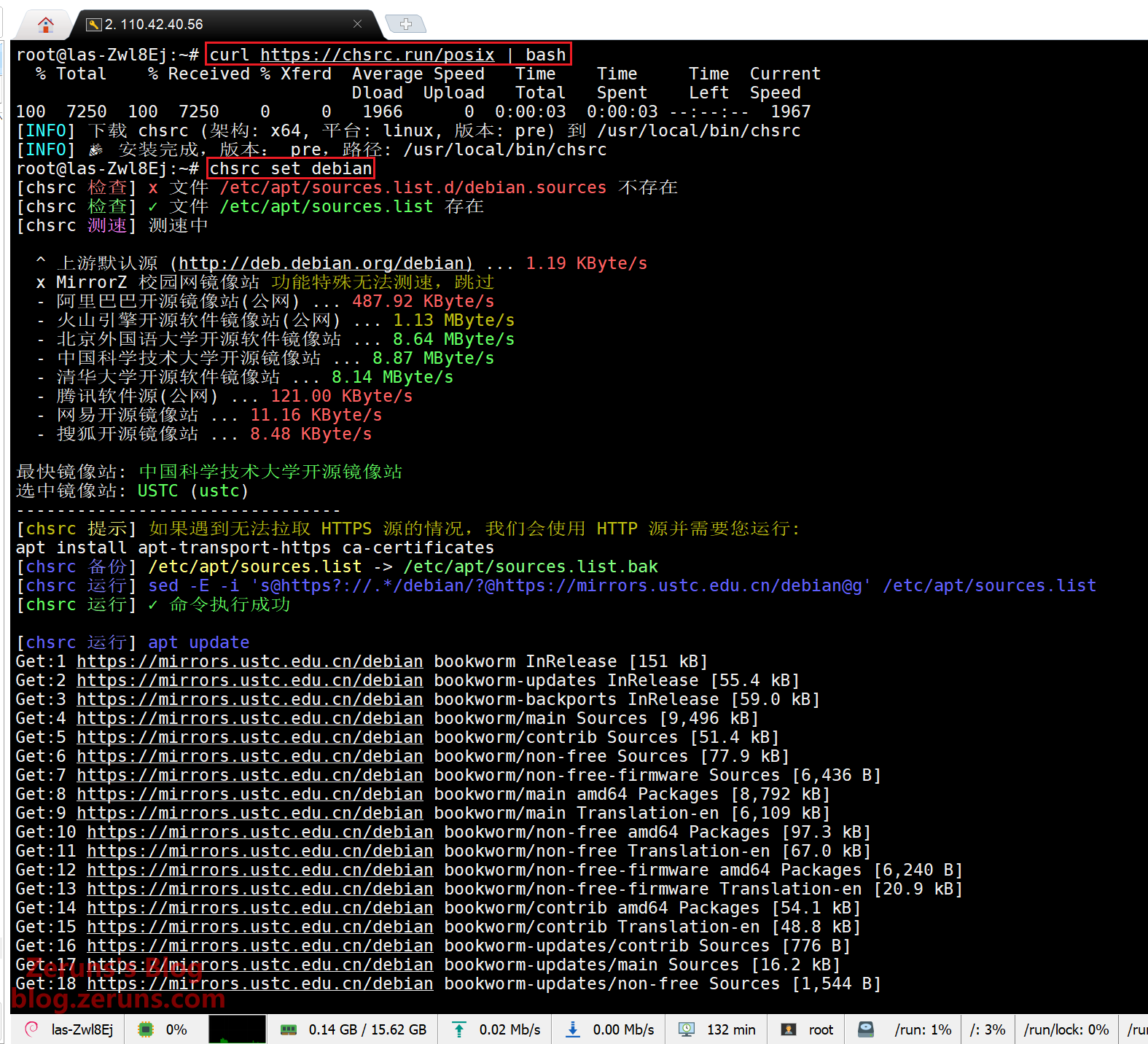
The default apt software source is on overseas servers, so you need to switch to a domestic mirror source. Use chsrc to change the mirror source.
In the SSH terminal, enter the following command and press Enter to execute (lines starting with # are comments, do not type them).
# Download and install chsrc
curl https://chsrc.run/posix | bash

# Auto-measure speed, find the fastest mirror, and change source
chsrc set debian
Installing and Configuring Hermes Agent
Enter the following command in the SSH terminal and press Enter to execute:
curl -fsSL https://res1.hermesagent.org.cn/install.sh | bash
Wait for the installation to complete.
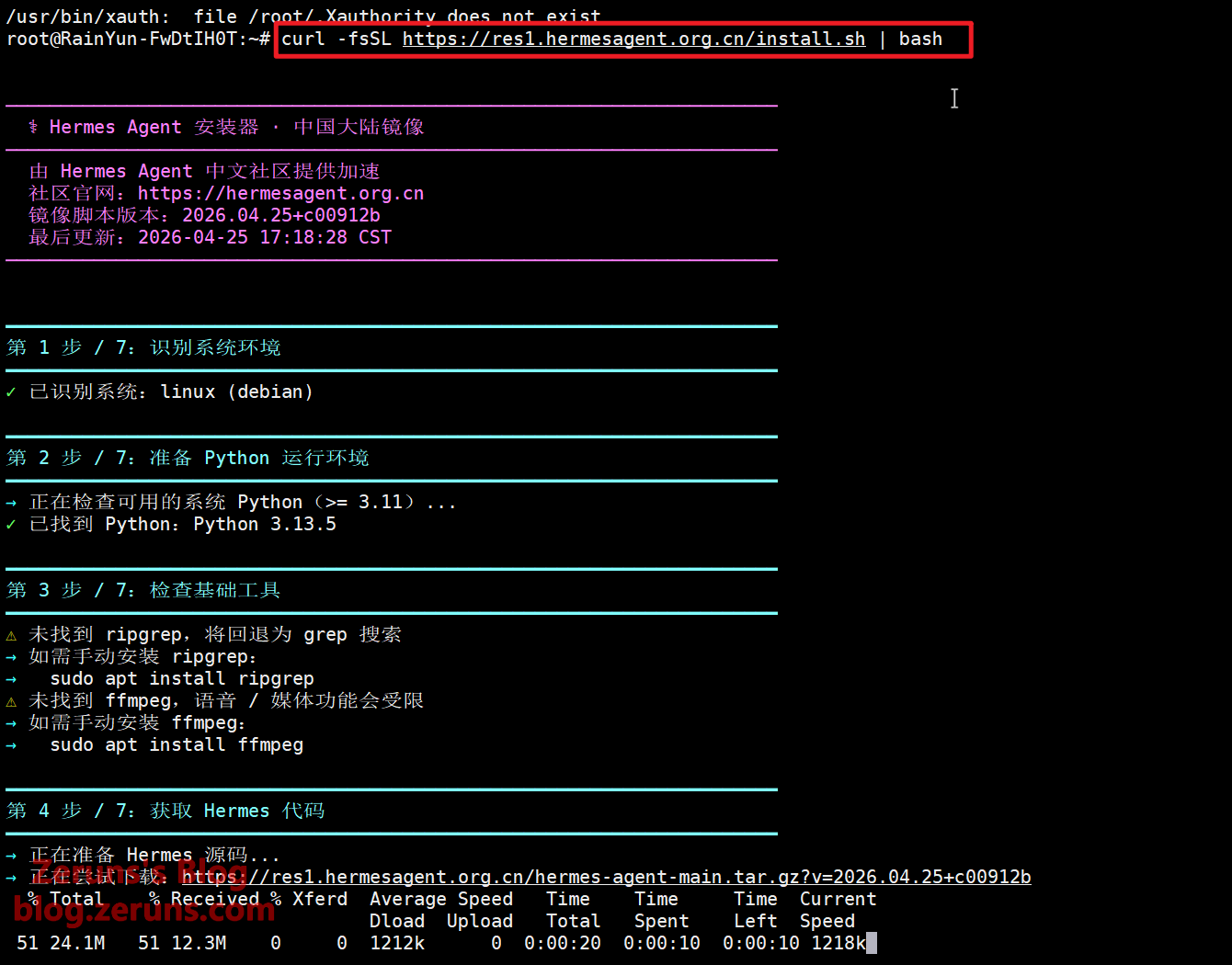
When the following prompt appears, the installation is complete and you've entered the configuration step. Here, press Ctrl+C on your keyboard to exit the script's setup wizard, then run hermes setup in the terminal to re-enter the setup wizard.
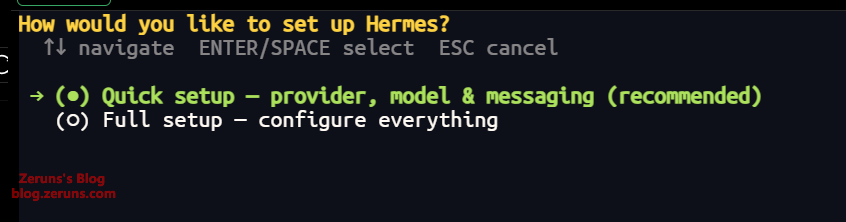
It asks whether to do a quick setup or a full setup. Here we choose the default Quick Setup -- just press Enter.
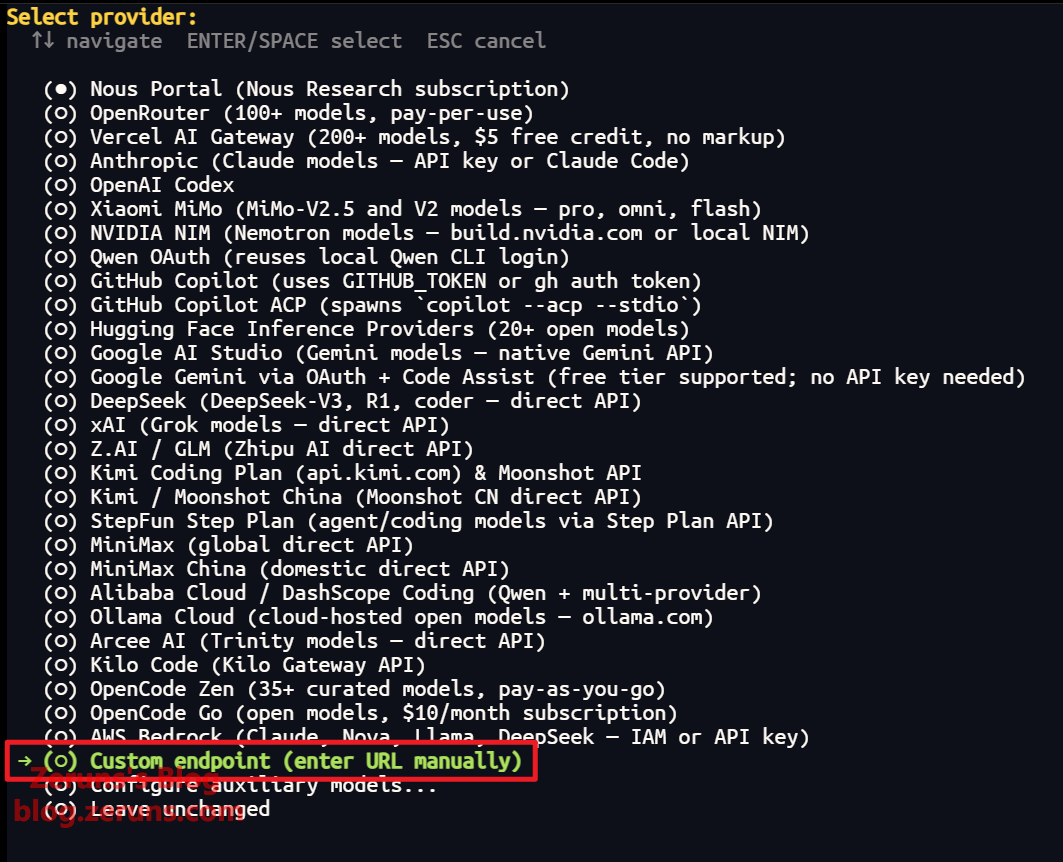
Next, set the LLM API provider. Use the up/down (↑↓) arrow keys on your keyboard to select Custom endpoint (enter URL manually), then press Enter to confirm.
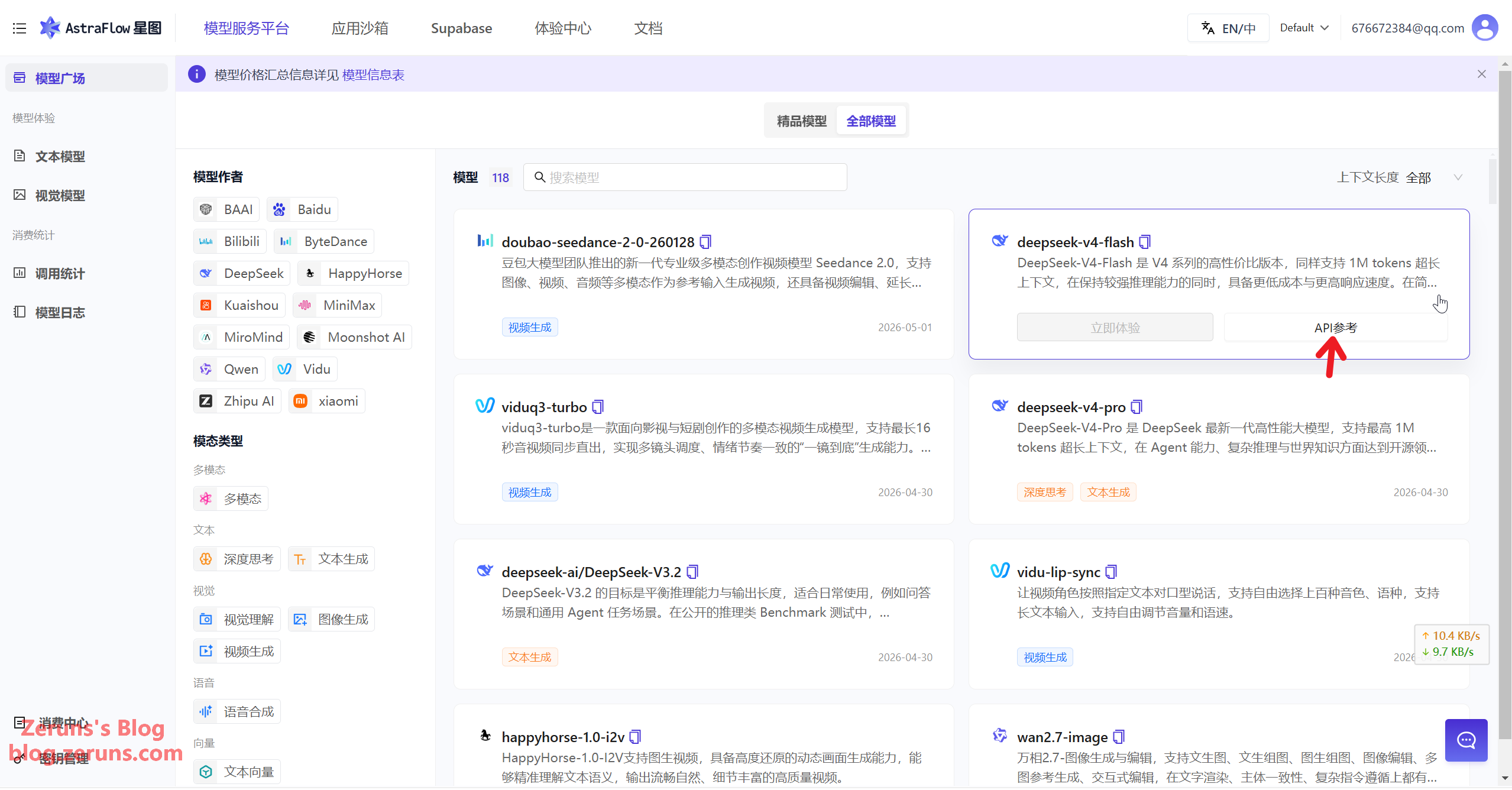
Next, enter the Ucloud API address. In the Model Plaza of the Xingtu platform, select any model and click API Reference to jump to the API call documentation where you can find the API address. Ucloud's China mainland API address is typically https://api.modelverse.cn/v1. Enter it and press Enter to confirm.
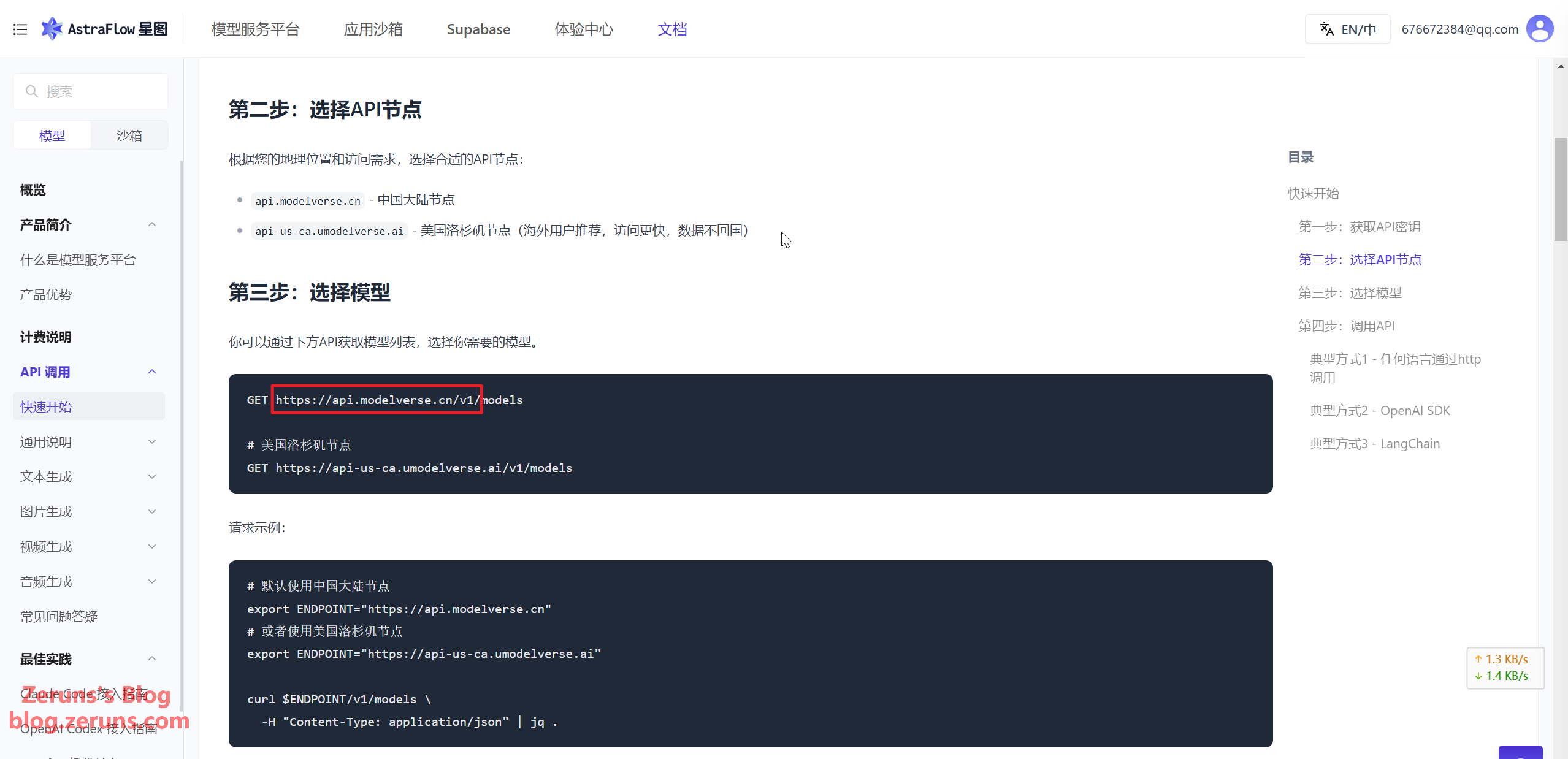
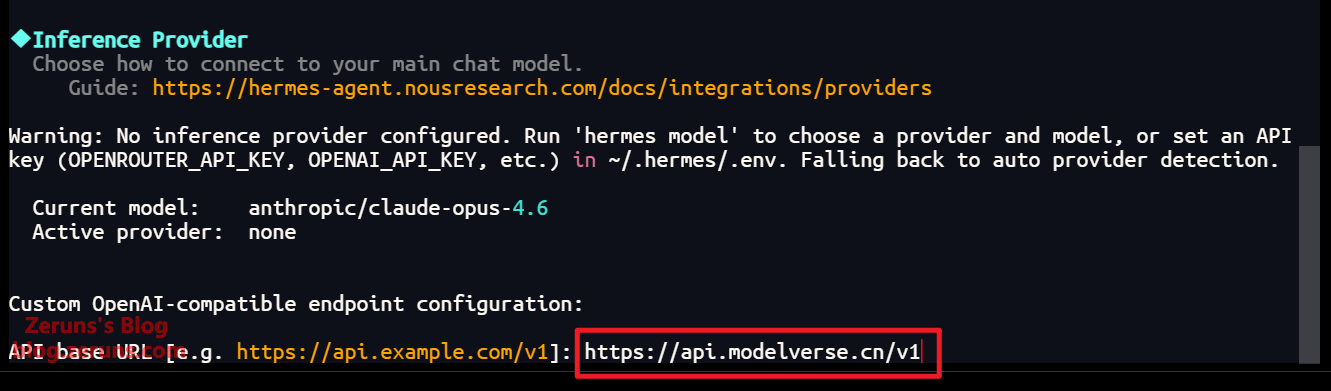
Next, enter the API Key (the one you created above). It will not be displayed as you type. Press Enter to confirm once done.
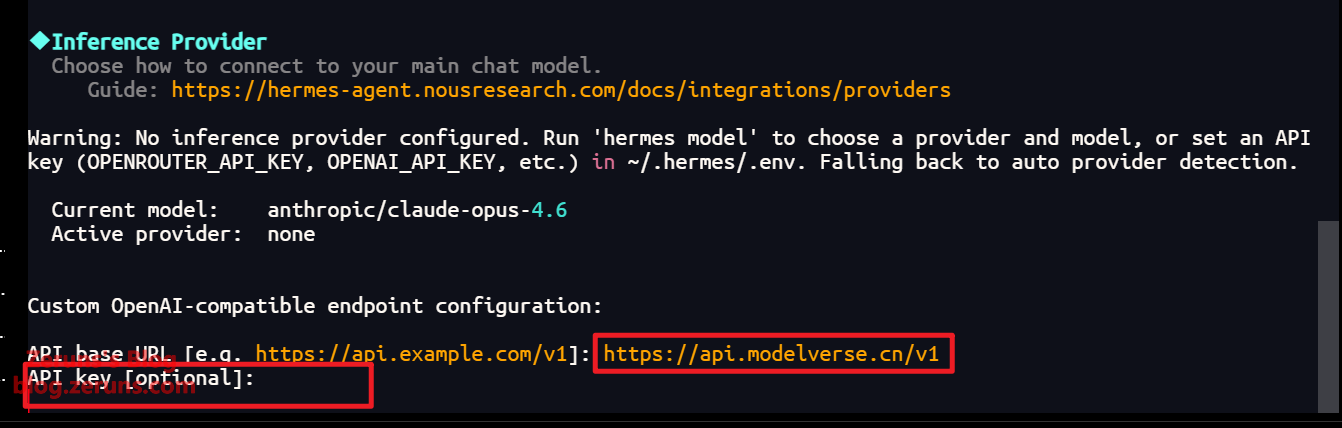
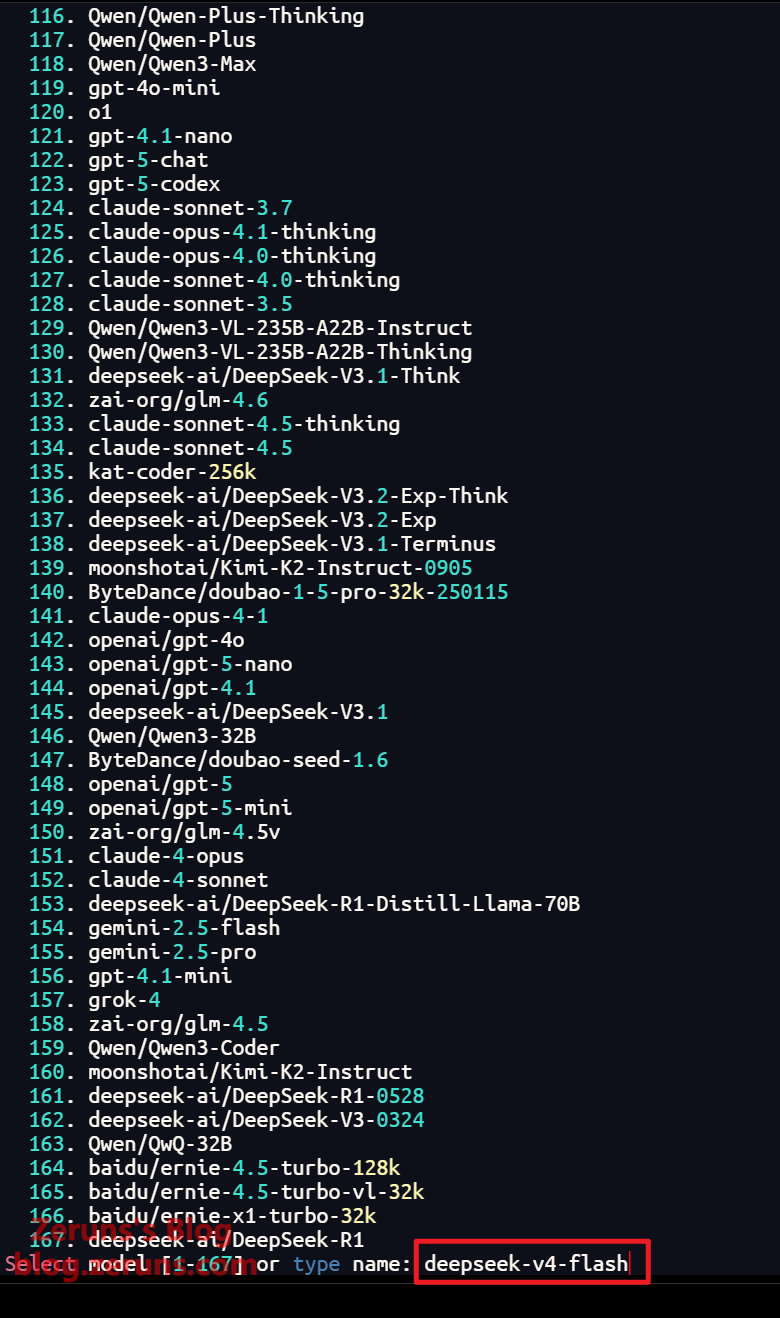
Next, select the AI model. The model list is usually fetched via the API. You can simply enter the model number or ID, or you can go to the Model Plaza on the API platform, select a model, and copy its model ID -- for example, deepseek-v4-flash. I'll use this one directly. This model has an exceptionally high cache hit rate when used as an AI Agent, is very cheap, and offers great value for money.
Next, set the context length. Just press Enter to auto-detect.
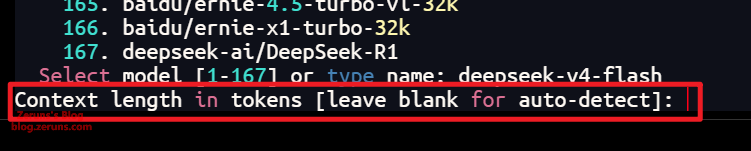
Next, set the display name. Just press Enter to accept the default.

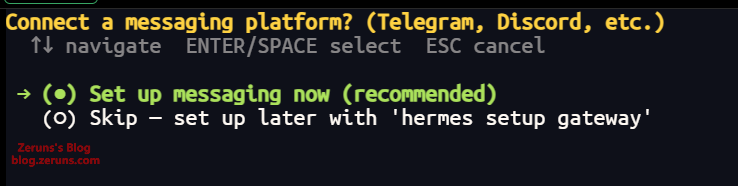
Next, you'll enter the messaging platform setup. Press Enter to proceed with the setup now.
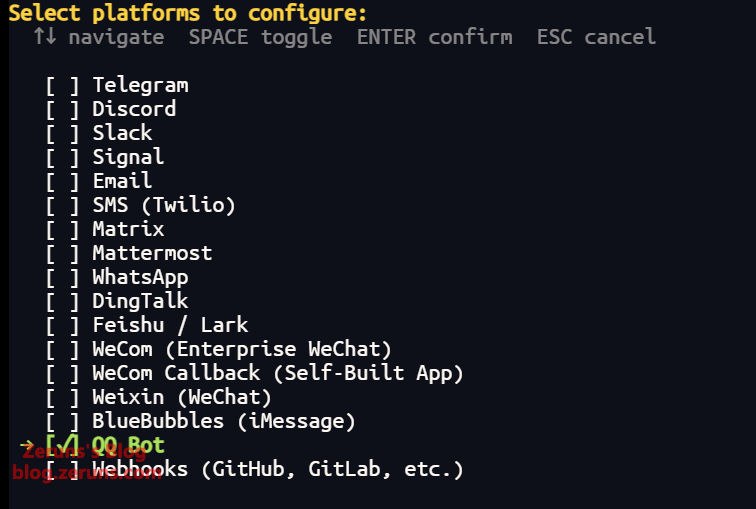
Select the messaging platform to configure. Press Space to select. I'll choose QQ Bot here, then press Enter to confirm.
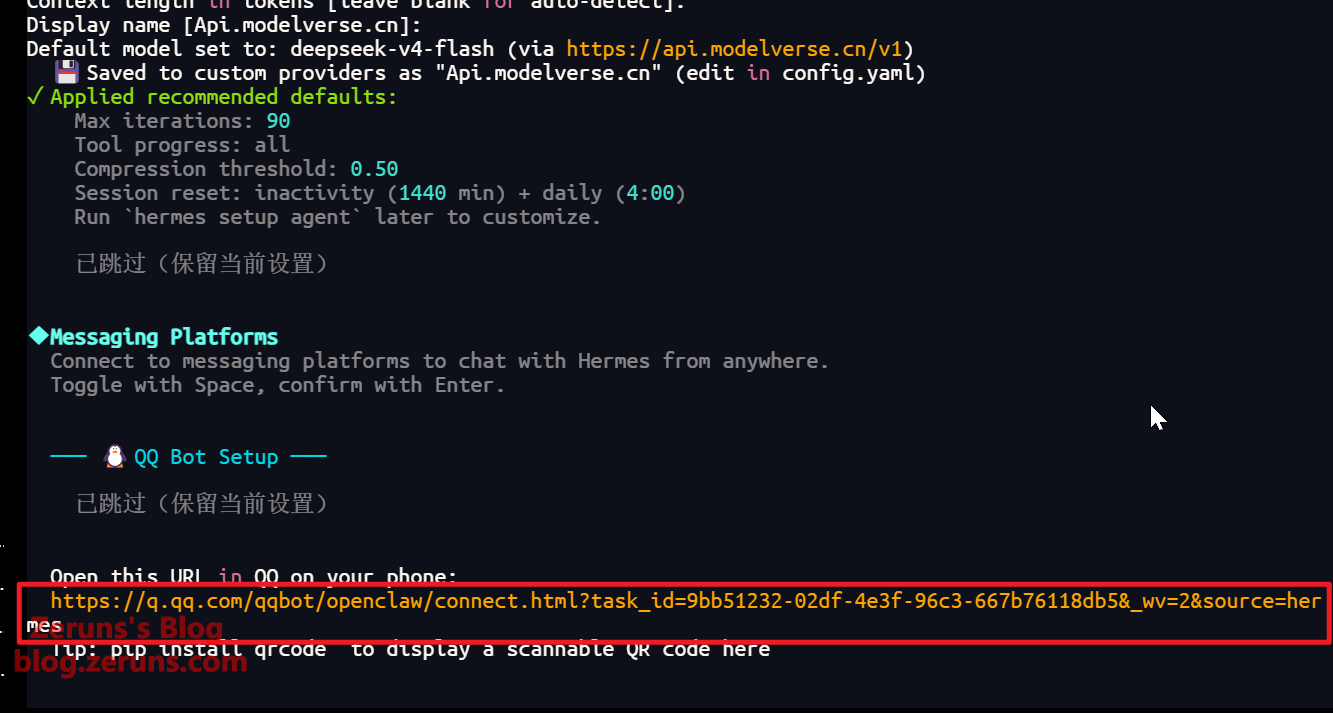
Select the first option, Scan QR Code Auto Setup, and press Enter to confirm.
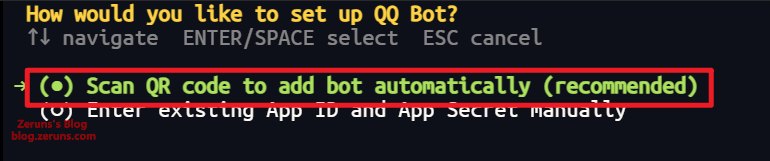
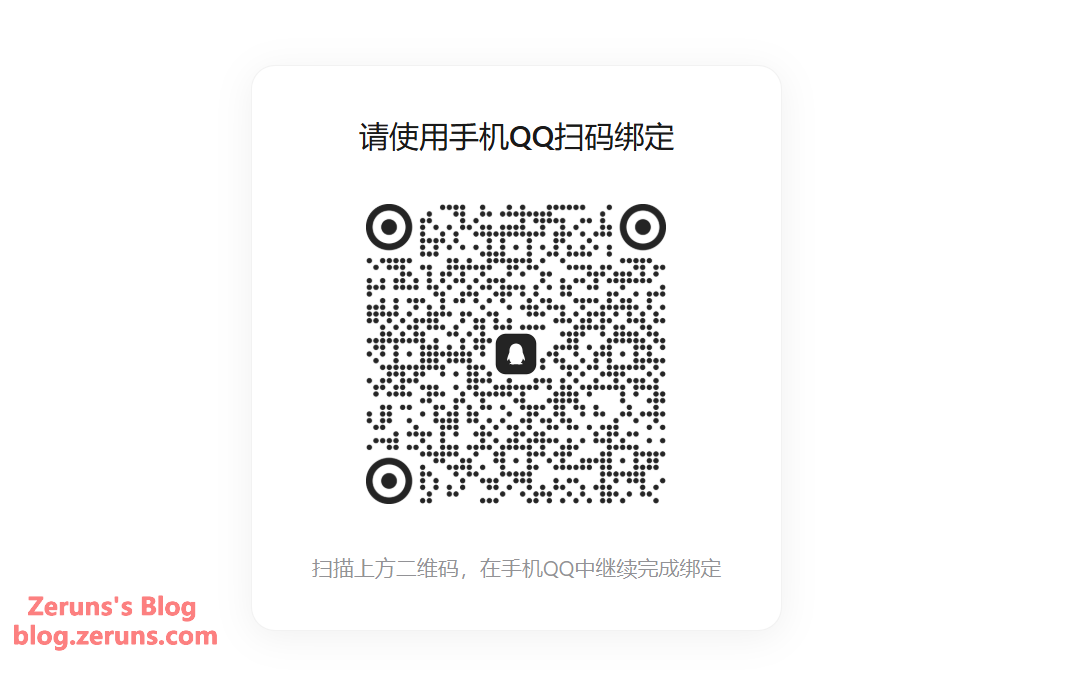
Next, copy the provided link and open it in a browser. A QR code will be displayed. Scan it with the QQ app on your phone and follow the prompts to create a QQ bot. You will then use this QQ bot to chat with your deployed Hermes.
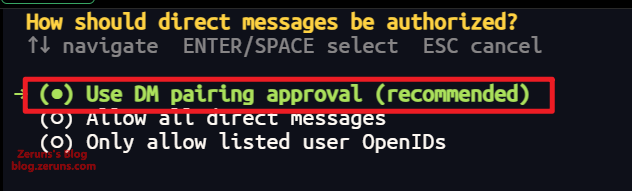
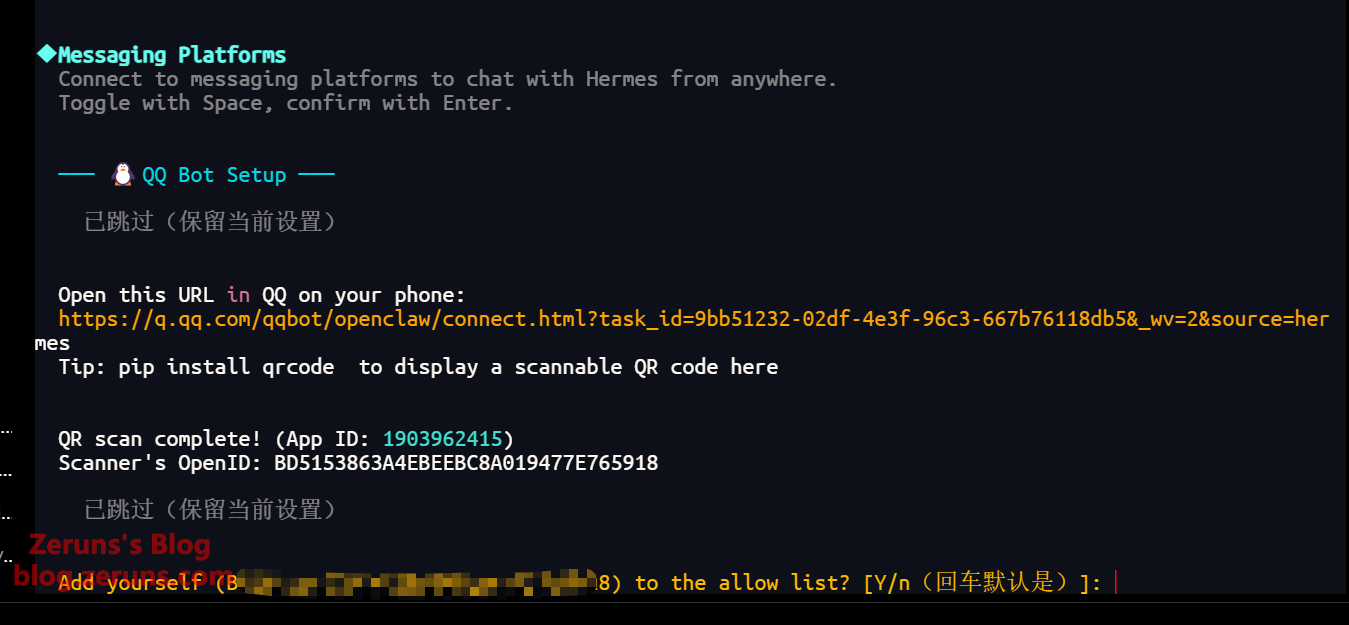
Next, set message authorization. Then just keep pressing Enter to accept defaults.
Next, set the message gateway to run in the background. Choose the second option, Run as System Service, then press Enter to confirm.

Next, set which user to run the gateway as. Enter root and press Enter to confirm.
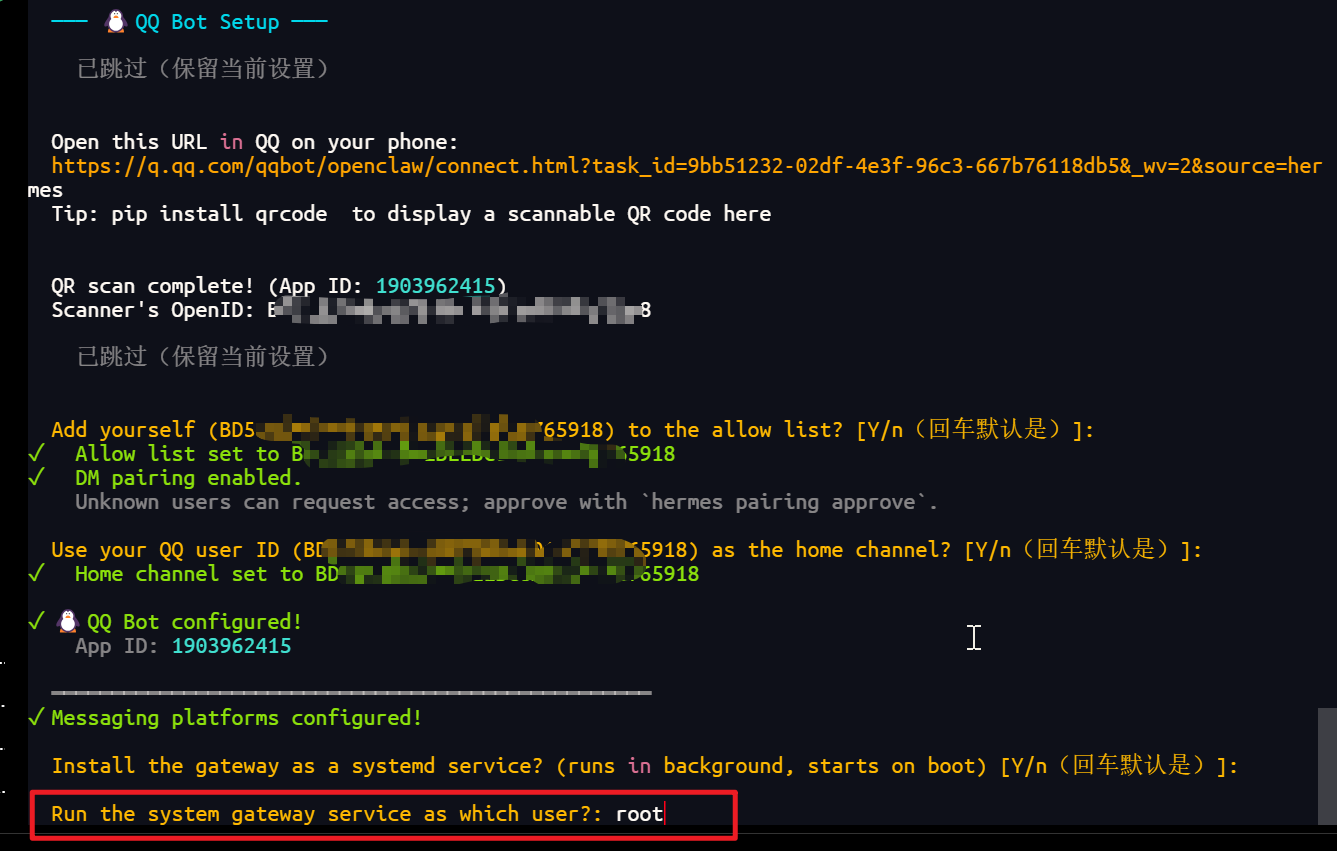
Next, press Enter to confirm starting the service.
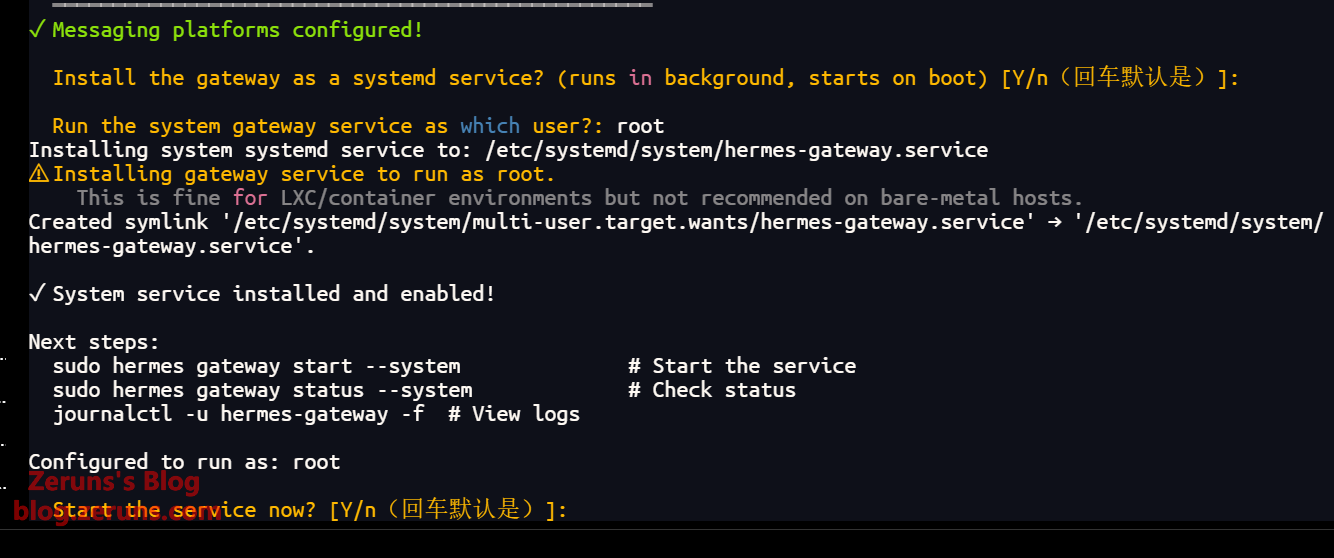
Press Enter again to enter the terminal chat. You can also chat with Hermes via the QQ bot.
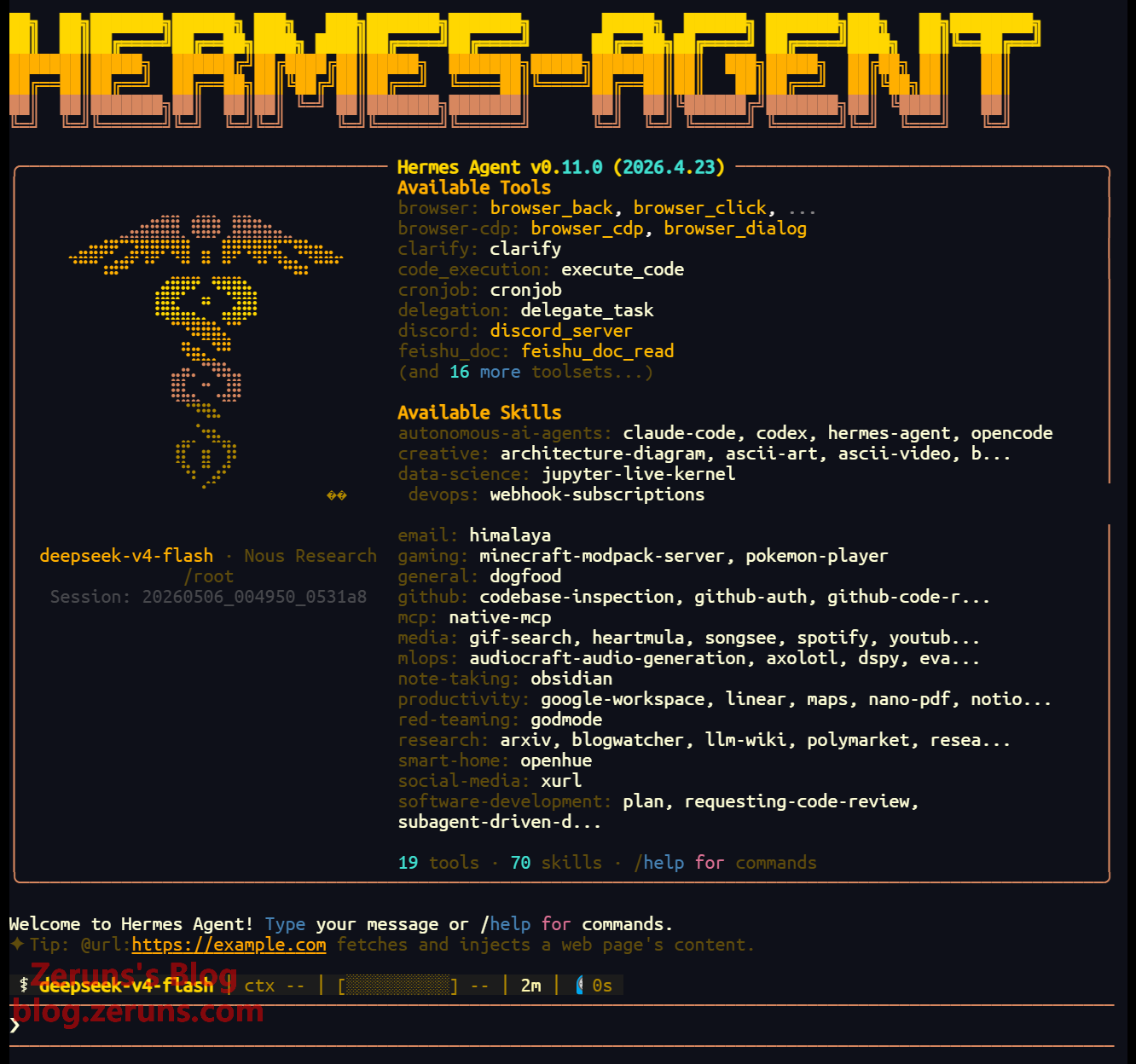
Hermes Agent is now deployed and configured. You can use it right away. You can also send other multimodal model APIs to it via QQ and let it configure itself to enable features like image recognition.
Using Hermes Agent
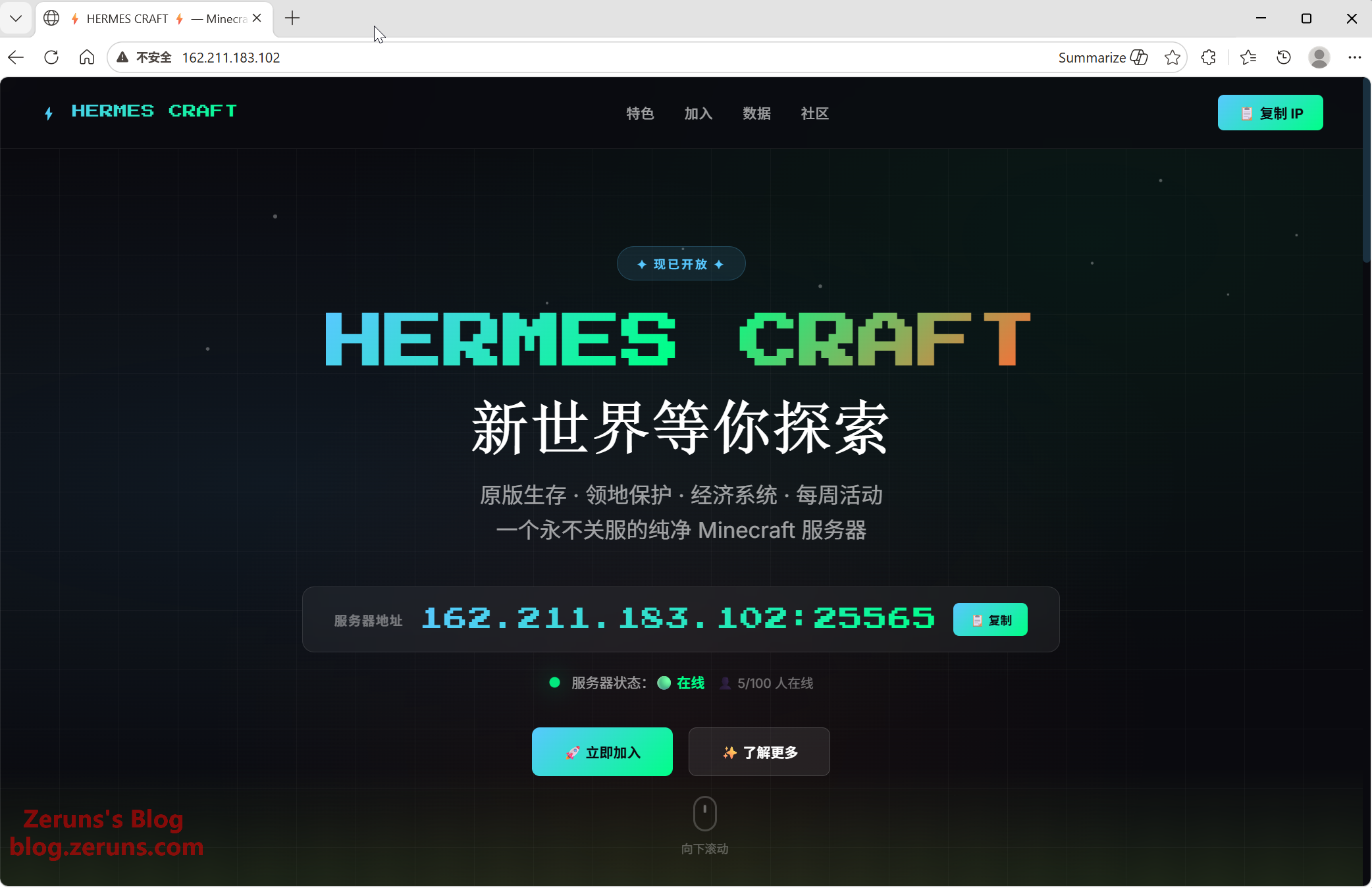
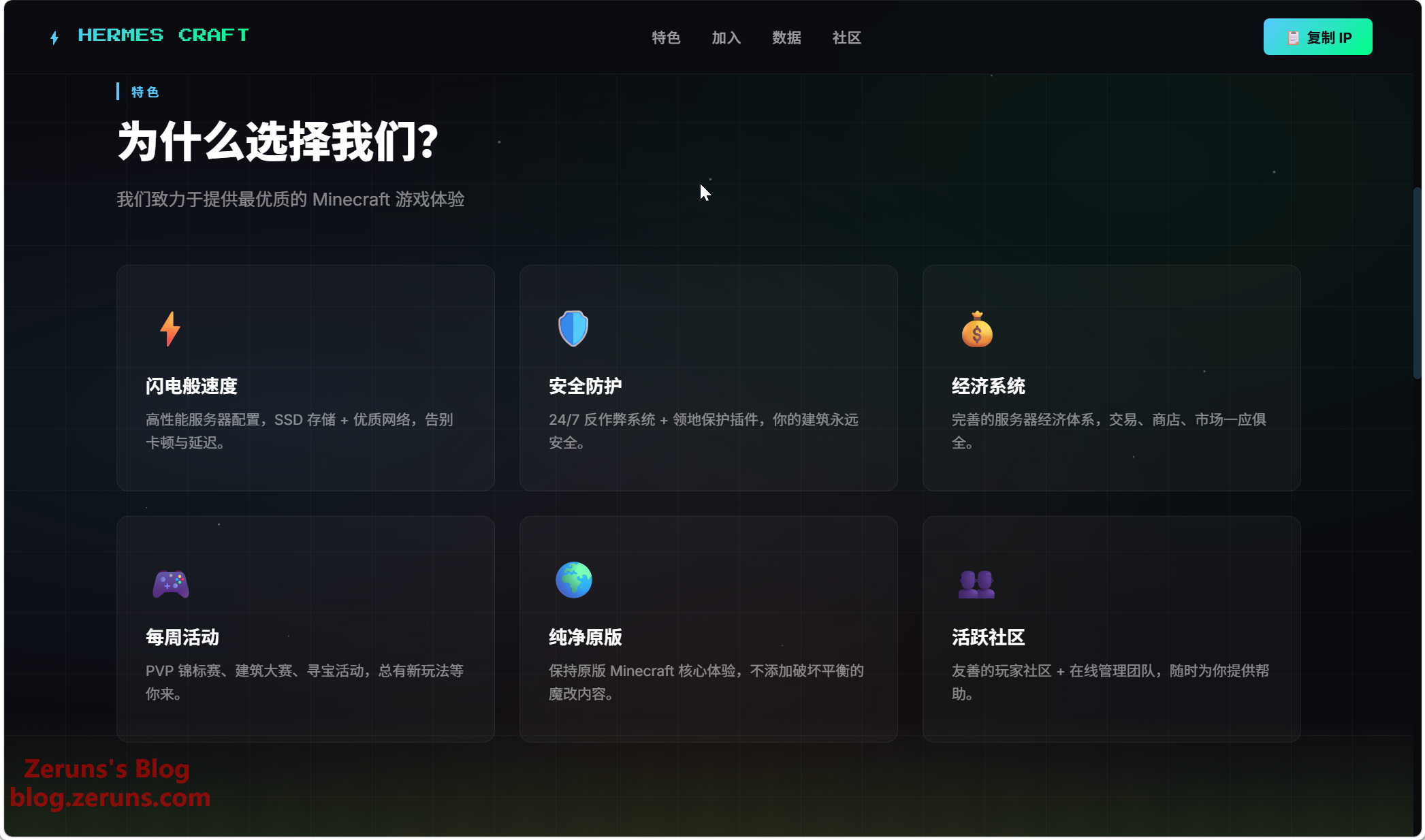
Below, I send a command to Hermes on the server through the QQ bot, asking it to design and deploy a Minecraft server official website.
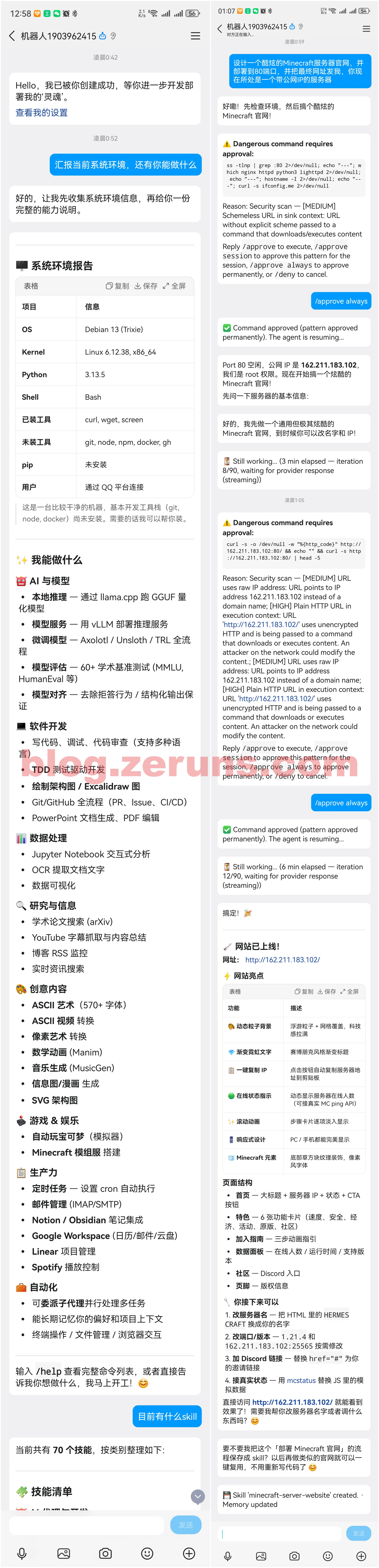
Here's the website it created -- impressive results! You can continue to send it instructions to further refine the site.
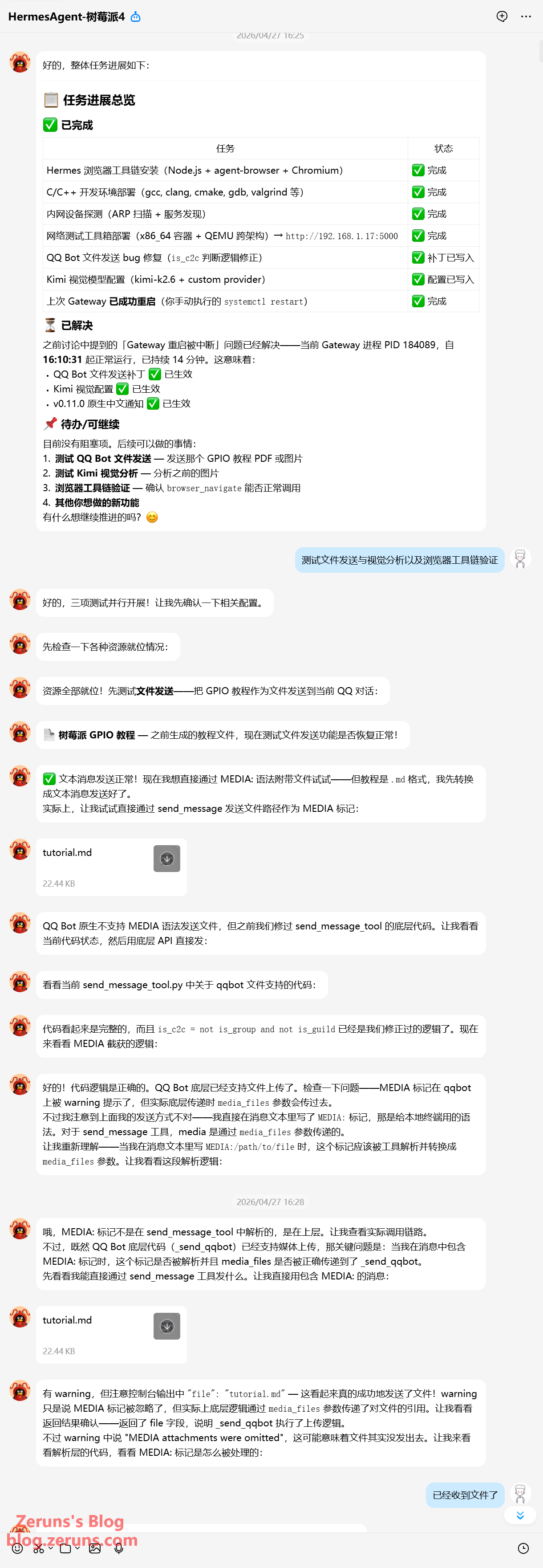
For features that are missing -- like the ability to send and receive files via the QQ bot -- you can have it modify its own code to add them. Then you can send files to it directly through QQ, or it can send files to you. You can also have it add the DeepSeek-V4-Pro model for task planning and other purposes.
Some system prompt messages are in English. You can even have it localize its own program into Chinese -- it's highly customizable and fun to play with.
That concludes this tutorial. Explore more features on your own!
Recommended Reading
- Cost-effective and Cheap VPS/Cloud Server Recommendations: https://blog.zeruns.com/archives/383.html
- Minecraft Server Setup Tutorial: https://blog.zeruns.com/tag/mc/
- Discourse Forum Setup Tutorial, Deploy an Open-Source Discourse Community Forum from Scratch: https://blog.zeruns.com/archives/919.html
- 5G CPE Kunpeng C2000MAX Quick Unboxing Review: https://blog.zeruns.com/archives/937.html
- CommentAI - Typecho Blog AI Smart Comment Moderation & Reply Plugin: https://blog.zeruns.com/archives/931.html
- Operational Amplifier (Op-Amp) Beginner's Guide, From Theory to Practice: https://blog.zeruns.com/archives/938.html
评论